Hot Water Systems Comparison: Electric, Heat Pump, Solahart & Instant Gas
Weighing Up the 4 Most Common Hot Water Systems in Karratha.
Aug 23, 2026
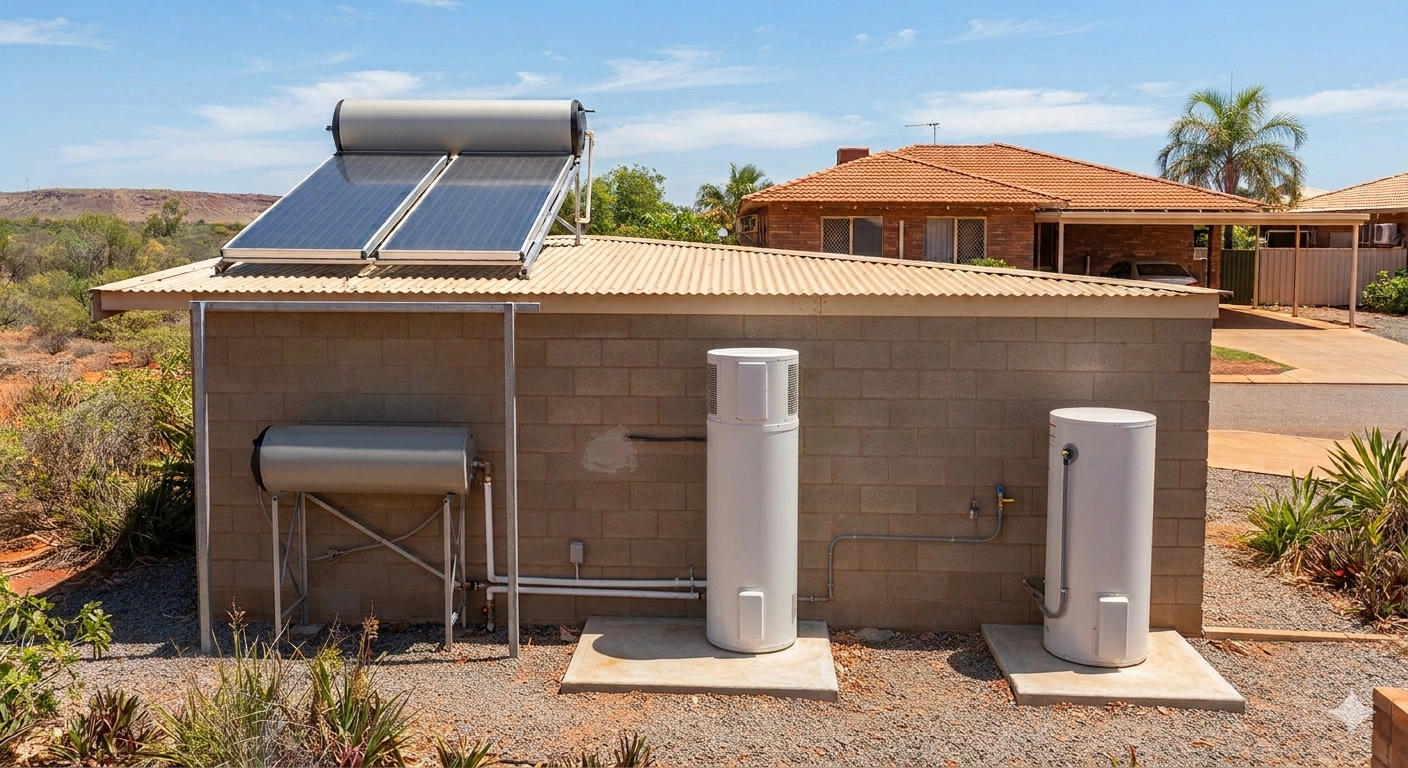
Choosing the right hot water system in Karratha is essential due to high power costs and unique Pilbara weather conditions and water quality. This guide reviews the pros and cons of electric storage hot water systems, energy-efficient heat pump hot water systems, solar-powered Solahart hot water systems, and instantaneous LPG hot water systems, to help you pick the best system for your property.
1. Electric Storage Hot Water Systems
Electric storage units use internal elements to heat water stored inside an insulated tank. They are a standard choice across many established homes in Karratha.
Pros
Low initial cost: Cheapest hot water system to buy and install upfront.
Reliable design: Simple internal components mean fewer complex parts to break down.
Consistent supply: Provides reliable hot water regardless of outside ambient air temperatures.
Cons
Higher running costs: Electricity prices in WA make these systems expensive to run long term.
Pilbara water wear: Hard water minerals in Karratha can accelerate element and tank corrosion.
2. Heat Pump Hot Water Systems
Heat pumps pull heat out of the surrounding air to heat your water, acting like a reverse air conditioner. They are highly efficient in tropical Pilbara conditions.
Pros
Maximum efficiency in Karratha: High ambient temperatures mean the compressor runs at peak efficiency all year.
Drastic power savings: Uses up to 60-70% less electricity compared to standard electric storage.
Eco-friendly: Significantly lowers household carbon emissions.
Cons
Higher upfront price: More expensive to purchase than simple electric tanks.
Fan noise: The compressor and fan create operational noise outside your home.
Electronic complexity: More technical control boards that must withstand intense Pilbara summer heat.
3. Solahart Hot Water Systems
Solahart systems use roof-mounted collectors to absorb direct sunlight. The heated fluid travels to a storage tank, providing zero-emission hot water backed up by an electric element.
Pros
Zero daily running costs: Harnesses Karratha's abundant sunshine for virtually free hot water.
Built for the Pilbara: Solahart products are highly durable and engineered for tough Australian elements.
Adds property value: Premium roof-mounted solar hardware is a lasting asset for local properties.
Cons
Highest upfront investment: Requires premium investment for structural roof installation.
Cyclone engineering required: Roof fixtures must strictly comply with Region D cyclone wind ratings in Karratha.
Booster reliance: Needs electric booster backup during heavy tropical cloud cover such as cyclones.
4. Instantaneous LPG Gas Hot Water Systems (Bosch 10H)
Instantaneous gas hot water systems heat water on demand using a gas burner rather than storing it in a tank. The Bosch HydroPower 10H is an outdoor, continuous-flow model that uses flowing water to trigger a internal hydrodynamic generator for ignition, operating without a power point or standing pilot light.
Pros
No electricity needed: Internal hydropower generator ignites the burner automatically, ensuring hot water is available during seasonal cyclone grid outages.
Compact footprint: Wall-mounted layout frees up ground space compared to heavy, large storage tanks.
Zero standby heat loss: Only consumes LPG when a tap is turned on, preventing thermal loss from a tank standing outside.
Continuous hot water flow: Provides a steady supply of hot water within its delivery limits without running dry like storage systems.
Lower hardware purchase price: Significantly cheaper upfront purchase cost than a Solahart solar setup or integrated heat pump.
Cons
Limited flow capacity: Rated at only 10 litres per minute, making it ideal for smaller households but restrictive if multiple taps are running simultaneously.
High long-term utility costs: The cost of regular LPG bottle refills and regional delivery to Karratha makes it more expensive per litre than modern electric storage or solar options.
Incompatible with home solar arrays: Cannot be timed or configured to consume excess electricity generated from an existing home rooftop solar PV system.
Initial water runoff: The unit requires a short lag time to fire up and heat the heat exchanger, leading to some initial water waste before reaching full temperature.
Sensitivity to high inlet temperatures: High ambient groundwater temperatures in Karratha's summer can sometimes cause the system to overheat water easily, making precise temperature modulation challenging.
If you'd like to further discuss your hot water needs or request a quote, please feel free to reach out.